Public developments and original analysis · Announcement date: · Sources
Consider an exhibition-poster revision: the date changes. An approved poster now needs a different time, a replacement product and an English edition. If the operations team received a flattened image, the work may return to a designer. If the text and product image remain independently editable, much of the composition may survive. This is a practical cost to compare when adopting image-generation tools.
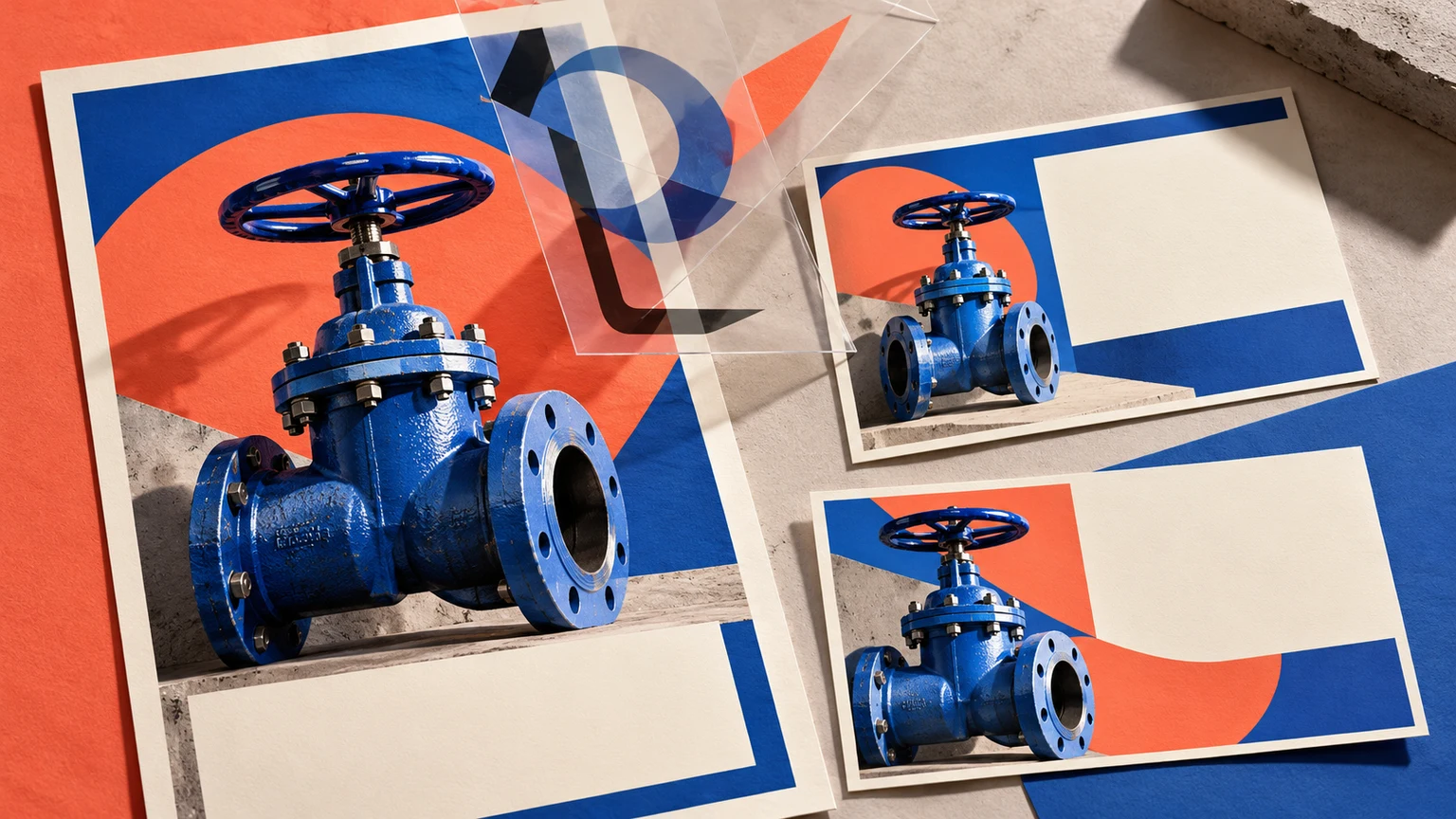
Canva launched its in-house image model Craft on October 22, making it available in Dream Lab and through a public API. Its announcement describes planning a composition before rendering it, alongside support for subsequent Magic Layers editing. That connects generation to a familiar production question: who makes the next version, and what work must they repeat?
What changes in an exhibition poster
An equipment poster has several kinds of content. A background allows visual exploration. The product must match the exhibited model. Dates and stand numbers must be exact, while a QR code needs to reach the approved destination. Generating everything into one image couples those requirements in the next edit.
Suppose a product owner changes only the featured model. The headline and event details are already approved. Regenerating the entire image requires checking material that was not meant to change. If the model also redraws the equipment, someone must inspect its shape, ports and markings. An apparently complete first draft can create additional review work later.
A team can assign production methods according to the purpose of each element. Real product photographs, brand marks and exact information should come from approved assets and copy. Generation can explore the visual material that actually benefits from exploration. Keeping dates, stand numbers and contact details editable reduces the scope of a later revision, at the expense of the convenience of a single generated finished image.
Craft is worth examining because generation and continued editing are being considered together. Canva’s Magic Layers help page also sets boundaries: single-page PNG and JPG inputs are supported, separation depends on complexity, and photorealistic images may be harder to handle than graphic designs. A team needs to inspect the layers produced from its own material rather than assume every object can be separated intact.
A representative trial can use the original revision request: replace the product, change an approved date and turn the Chinese headline into English. Observe which changes stay local and which require reconstruction. A few assets with specific editing goals can reveal edge quality, text reflow and mixed objects more clearly than a large collection of unrelated generations.
An English edition also changes space requirements. A model description occupying one Chinese line may need two English lines. Contact details, units and product names may have regional variants. Readable generated text is useful, but published copy still needs localisation for its audience. An editable layout lets an editor rearrange hierarchy when the translation grows without rebuilding the whole image.
What operations receives from the designer
The same campaign may need a banner, invitation image and social cover. The team must decide what remains consistent and what adapts to the dimensions. Cropping a vertical poster can remove product details or the contact destination. Generating each format independently can change the equipment’s appearance. Compare the production and review effort for usable final variants.
Established brand templates retain an advantage. When the composition is settled and each edition changes only a product and date, updating the template is often simpler. Generation has more room to contribute when a team needs a new direction or existing artwork cannot accommodate a different layout. A new model is not, by itself, a reason to abandon a reliable production method.
Mokyun’s marketing-content digital employee can contribute to preparing the revision brief: bring together confirmed event details, product evidence, approved pictures and channel-specific copy requirements; identify what actually changes; and prepare trilingual copy for review. This follows the current product positioning. Design editing, Canva connectivity and file handover require assessment in the chosen environment; an existing Craft connector is not established here.
The brief should tell the recipient which image is approved, which model to show, which product statement has supporting evidence and what remains unresolved. Its purpose is to reduce guesswork during design. Where a company already maintains an effective asset library and design process, a digital employee should address remaining repetitive preparation. Another document does not automatically improve the process.
The handover also needs a shared meaning of completion. An exported PNG can be ready for publication without supporting the next revision. A file retained in the design tool still requires the operations user to have access and editing rights. If an external designer uses different software, establish which files they can receive. Editability within one platform should not be presented as a promise of continued editing in every application.
Before automating generation
Teams considering API-based production need the current developer documentation. Canva’s image-generation API remains in preview. Public apps using preview capabilities cannot pass publication review, and interfaces may change without advance notice. Availability inside a product and suitability for a production integration require separate decisions.
Generated-image download links are valid for 24 hours; results can also be saved as image assets in the user’s account. Someone must arrange storage and handover. Sending a temporary link to a designer may fail if approval takes longer than its lifetime. Keep the image, editable source and approved version distinguishable so the team can locate what was actually published.
Calls consume the user’s AI credits. A useful cost comparison includes exploratory generations, failed attempts, manual corrections, copy review and version maintenance. For occasional poster work, completing the task in the design tool may be more economical. Stable, repeated demand provides a stronger reason to evaluate automation and retain an alternative for changes in preview functionality.
Craft adds another production option. A company can judge it through a real revision: whether the existing composition remains useful, exact information can be updated reliably and the next person can continue without starting again. Reducing that rework provides a reason to make a good-looking generation part of sustained design work.
Sources
- Introducing Canva Craft
Source published: · Accessed:
- Craft API announcement
Source published: · Accessed:
- Magic Layers supported formats and limitations
Accessed:
- Image generation API overview and preview conditions
Accessed:
- Create image generation job
Accessed:
Mokyun Editorial · neo@mokyun.com
