Public developments and original analysis · Announcement date: · Sources
Microsoft Clarity published a study on October 29 describing checkout, form and appointment activity in sessions involving AI agents. The practical news for a business website is that some visitors are trying to get work done on someone else's behalf. Service descriptions, quote requests and booking forms increasingly have to support that interaction as well as a person's direct visit.
The study covers more than 5.2 million agentic-classified sessions across 230,511 Clarity projects, sampled from August 13 to September 9. Microsoft says these sessions can include human handoffs and do not establish autonomous task completion. The publication date is later than the observation period, and the sample does not represent every website or agent.
Reading the activity data
The article lists checkout, form submission and on-site search among recorded events. Its percentages require care: the table values cannot be directly reconciled with the overall session count, and the prose switches between shares of sessions and shares of actions. Until the denominator is clarified, these figures should not be used as agent purchase-conversion rates or a forecast of additional revenue for a particular business.
A narrower observation remains useful: interactions associated with transactions and appointments were recorded. That is a reason to examine task pages, without immediately rebuilding a website. Establishing whether an organization's own site receives this activity, and where it stops, provides a better basis for work than an industry growth number.
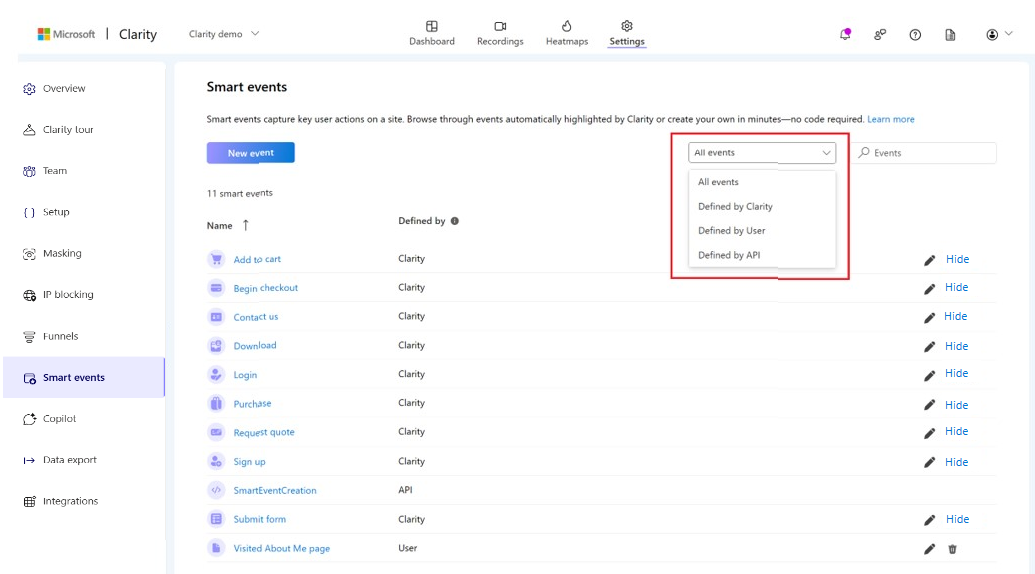
The event definition matters as well. Clarity's Smart Events identify interactions through signals such as clicks and page visits, and can be customized. An event called form submission might represent a button click, a success message or a lead created in the business system, depending on its implementation. Analysts need to understand what was measured before comparing traffic sources.
This separates several useful observations. A crawl request records access to a page. A citation in an AI answer shows that information was selected. A valid form record in the business system shows that an inquiry was received. They describe different stages. Growth teams can monitor each, without treating an earlier stage as evidence of a later one or assuming undetected agent traffic is absent.
Information needed for a quote request
Consider a hypothetical business-service inquiry. A prospective customer needs to establish service scope, delivery location and basic eligibility before requesting a quote. If pricing information sits in a promotional image and restrictions are hidden in a separate download, both a person and an agent may lack essential context. More marketing articles will not necessarily address that obstacle. Putting the relevant conditions in accessible page text addresses the task directly.
The form should also make the purpose of its questions clear. Company details and the business requirement help sales prepare; a proposed date affects resource planning. Required fields without a defined use create more work. When the requirement is still uncertain, accepting an initial question for sales to clarify can be more reasonable than asking a visitor to invent a complete project plan. This choice benefits human visitors too.
Mokyun's marketing-content and knowledge-processing direction can support the preparation behind these pages: organize consistent answers from authorized product information, service terms and frequently asked questions, with traceable evidence for both the service page and sales material. Publishing pages, implementing event measurement and updating customer systems need separate work and verification in the actual environment.
Maintenance should follow the questions customers actually raise. If inquiries repeatedly lack the same detail, determine whether the page fails to explain it or the business inherently requires a conversation. The first calls for clearer information; the second calls for a useful sales handoff. Treating every incomplete inquiry as a design fault can lead to more mandatory fields and fewer worthwhile conversations.
Deciding which website work comes first
Agent usability and GEO share some underlying work: identify the business clearly, explain services and conditions, and keep evidence consistent with the page. Their outcomes need separate measurement. Readable content does not establish a citation; a usable form does not establish a qualified lead. Clarity's study offers evidence to investigate website behavior, without demonstrating that a redesign improves AI citation or search ranking.
A growth team can begin with an entry point whose business outcome is already clear, such as a consultation booking. Establish what a successful booking leaves on the page, in the backend and in sales follow-up, then investigate interruptions in sessions involving agents. The purpose is to find a specific obstacle. Repeatedly creating real bookings is unnecessary; test activity should be distinguishable from customer requests.
Prioritize by consequence. Inaccessible service conditions or a submission that creates no backend record generally deserve attention before a cosmetic button change. When little identifiable agent activity is present, improve problems human visitors encounter and continue observing. An unproven traffic source is insufficient reason to compromise the experience of existing customers.
Clarity's study extends the question beyond arrival at a website. Can the information support a choice, can the entry point receive a valid request, and can sales continue the work? These improvements have a direct business rationale. Whether they also generate more AI citations is a question for observed results.
Sources
- What AI Agents Do on Websites: Insights From 5.2 Million Sessions
Source published: · Accessed:
- Microsoft Clarity Smart Events documentation
Source published: · Accessed:
Mokyun Editorial · neo@mokyun.com
