Public developments and original analysis · Announcement date: · Sources
Text-and-image decision models offer another option for manufacturing defect triage. Practical value depends on matching an inspection image to the right product and specification, then sending uncertain cases to the right reviewer. A Mokyun digital-employee solution can organise that evidence and handoff around one inspection record, helping quality staff focus on professional judgments.
The release: structured judgments from text and images
Liquid AI announced d1-ultra on October 15, 2026 as a hosted API model. Its launch describes text and image input with probability, classification or scoring outputs for predefined questions, including circuit-board inspection. Vendor ranking claims are not evidence of factory performance.
The official decision-model documentation distinguishes hosted d1-ultra from other d1 models with downloadable weights. An assessment must identify the actual service, data-processing conditions and interface. This article reports no model call or completed Mokyun compatibility test.
The operational tension: fast routing and accountable release decisions
Consider a hypothetical electronics manufacturer receiving inspection images from several batches. Product variants, specification revisions and camera angles differ. Quality staff must assemble the context before separating suspected connector problems, unreadable images and cases needing more measurements.
Production needs timely movement while quality staff must manage missed defects and false alarms. Similar-looking components may have different tolerances. Even a clear image supports only visible-feature judgments. Electrical performance and internal structure still require the corresponding measurements and professional review.
The deliverable: a reviewable exception record
A suitable first digital-employee deliverable is an exception record containing the original image, product and batch identifiers, capture conditions, specification version, preliminary result, missing information and receiving role. An image with an unknown product association needs information completion before normal routing.
When probabilities help prioritise review, enterprise samples must establish how they relate to errors in that setting. Thresholds depend on missed-defect consequences, review capacity and image quality. Suspected defects, uncertain cases and unreadable images each need an explicit destination. Product release remains under existing quality responsibilities.
Mokyun’s role: connect specification knowledge and quality work
Mokyun’s published product scope covers enterprise knowledge, system connections, task orchestration and process execution. For an inspection record, a proposed design retrieves current specifications with sources, associates batch and quality information, and coordinates new photographs, missing-data collection and specialist review.
The image model performs a bounded triage step. Quality professionals own the technical conclusion, followed by authorised ticket or handoff updates under company rules. MES, quality-system, image-storage and model interfaces need individual validation. A first scope can work with authorised exports and review drafts.
Specifications, images and review responses then travel with the same business object. Mokyun’s place is in preparation and handoff. Those task records also help the enterprise locate repeated returns, preparation delays and the next useful integration scope.
Scenario: closing a suspected connector-pin exception
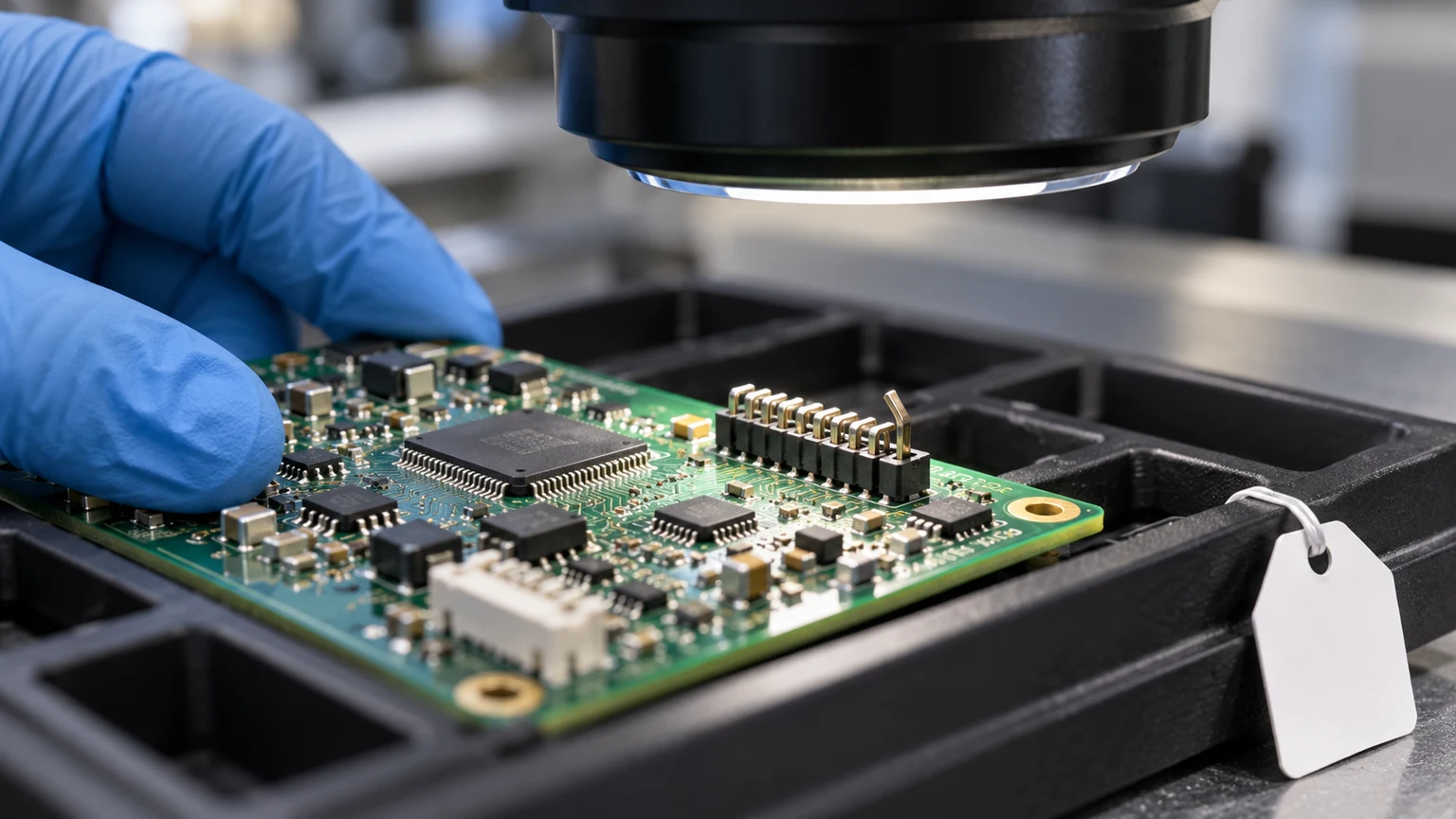
In the scenario, the digital employee gathers a board image and applicable specification, records a suspected visible pin problem and routes it for quality review. If the angle hides the relevant area, it requests another photograph while retaining the original record. The additional image returns to the same review item.
After a professional decision, existing rules determine rework, reinspection or another disposition. Ticket creation, owner receipt, completed action and final quality conclusion are recorded separately. A generated description proves a preparation step is complete; delivery of the full task also requires the associated ticket and responsibility status.
A pilot: one visible-defect category and complete review records
Begin with a clearly specified visible-defect category and reasonably stable photography conditions, retaining human review. Include normal, defective, unclear and incomplete samples. Measure missed defects, false alarms, repeat photography and total preparation-plus-review time for each record.
The intended benefit is less context gathering and repeated routing. Actual savings must come from pilot records. Redacted inspection samples and an existing review form can anchor a Mokyun scenario assessment that defines the first exception record, human decisions and system handoff.
- Mokyun digital employees and enterprise knowledge
- Mokyun enterprise system integration
- Official Liquid decision-model documentation
- Discuss an inspection workflow
Sources
- Liquid AI: d1-ultra launch announcement
Source published: · Accessed:
Mokyun Editorial · neo@mokyun.com
