Public developments and original analysis · Announcement date: · Sources
A vendor stores a customer's repair tickets. The customer first asks the vendor to investigate defects, then wants the records to train its own assistant. The vendor is interested in using the same records to improve a model it offers to several customers. Who holds the data, who uses it and who benefits change with each purpose. The General Department of China's National Data Administration opened a consultation on AI data use on November 26, with comments due December 6. The attached draft gives businesses a way to ask which uses are already defined and which still need agreement.
How the draft distinguishes data roles
The first four provisions address lawfully obtained data, data collected in business activity, derived data and data obtained by agreement. The first distinguishes a right to use data from a right to provide it to others, with conditions tied to law, the contract and other parties' rights. Provision five addresses processing on another party's behalf, including source data, intermediate material and results. For a processor's separate use, the draft calls for attention to legal requirements, explicit authorization from the commissioning party and other parties' rights. Provision ten supports keeping records of sources, permissions and processing. The consultation is open and the notice points to pilots as a next step. Existing rules and agreements govern current work.
Provision three discusses derived data created through work such as analysis or extracting key information. It describes substantial changes to the data's content, form or structure that add significant value, and proposes developing more detailed recognition guidance. A practical starting point is to ask what sensitive details the output retains and whether the original permission covers the new use. Reformatting a ticket or removing a name can leave an order number, incident narrative or description of a customer's environment that still identifies the organization. A quick conversion can be expensive to unwind if the team later discovers that no one recorded which batch was used.
Three uses for one repair record
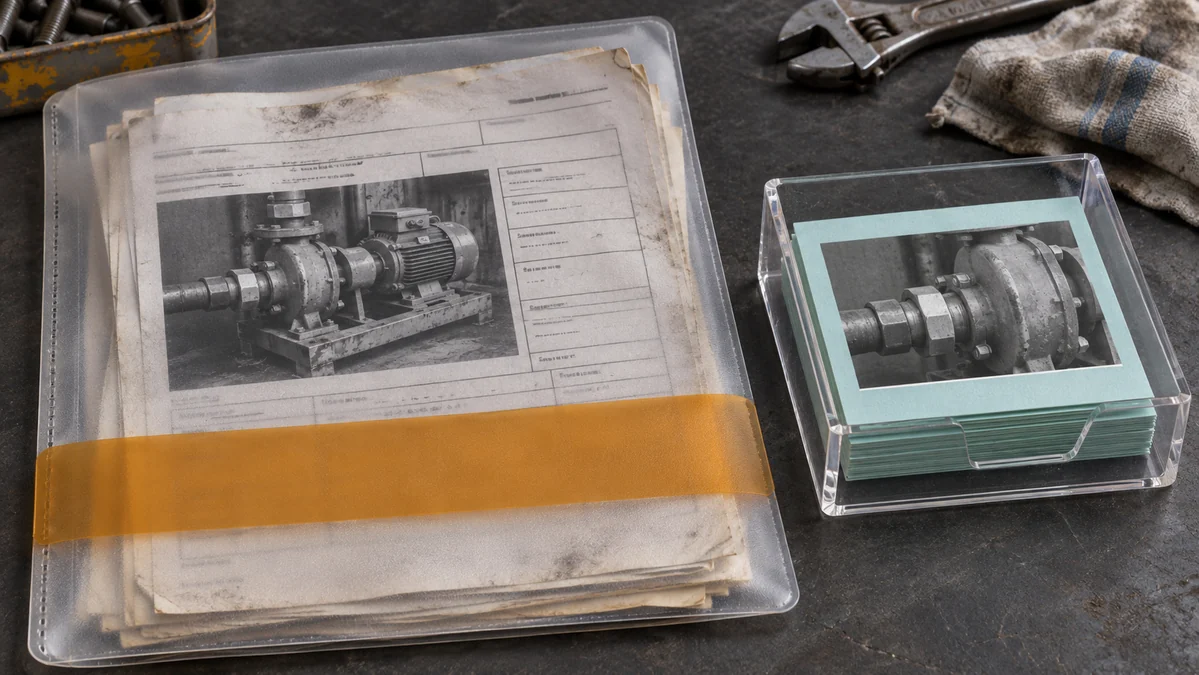
Suppose an industrial equipment support team wants to spend less time answering recurring questions. One option is looking up a ticket to handle the current repair. Limit access to the relevant customer and order, identify the source in the answer and keep the existing work record. A second option is building separate knowledge entries for future questions. Start from a verified manual, part revision and supported model, and leave out fields specific to one customer's case. A third option is passing tickets or question-and-answer examples to another organization to train a model. Revisit who receives them, what will be built, whose cases it will serve and how future use can stop. Record each purpose separately so reviewers can find the exact scope that was approved.
When the team mainly needs to find the right manual more quickly, improving the knowledge entries and search scope usually takes less work than preparing raw service records. A repair procedure that changes with firmware can be labeled with the model and effective date and replaced when new guidance arrives. If the objective is improving answers to recurring free-text questions, start with examples whose use has been checked. Sample their content, source and permission, then measure how much editing the model's answers require. Keep original tickets in the service system and traceable references in the trial set so the next version is easier to manage.
What to hand over with the next batch
Start with a small handover. Have the business owner identify the source, the task and the fields it requires. Have the person delivering the data record the transformations and where the resulting material goes. A read-only knowledge base needs to define who can query which customer's records. A training batch also needs a source version, rules for sending it to an outside service, a retention period and a plan for when use ends. Update the purpose and permission record with each revision so the next maintainer can tell whether an older version should be retired, replaced or kept for its original use.
Try the handover in reverse. Pick a tested answer or a training batch and ask the next maintainer to find the manual version, source and agreed use. If the trail stops there, pause expansion. If the trail is intact, simulate withdrawing one source. See whether a knowledge entry can be retired separately, whether training batches are versioned and who decides what happens to material already delivered. A record useful for withdrawal can also support routine replacement.
If a team wants to comment on the consultation, a specific disagreement makes a clearer submission. A processor and customer may disagree on reusing a fault classification across customers, or a combined set may be hard to update when one input expires. Remove customer-specific details and explain who is involved, what changed in the data and how the output would be used. Keeping track of the source, the derived material and each new purpose is work a company can start now.
Sources
- National Data Administration of China, public consultation notice
Source published: · Accessed:
- National Data Administration of China, AI data-use draft for public comment (PDF)
Source published: · Accessed:
Mokyun Editorial · neo@mokyun.com
