Public developments and original analysis · Announcement date: · Sources
A block lands in front of a tray after release. The arm locates it again with a camera, takes a second grasp and puts it in the target. On November 25, SenseTime announced the full release of SenseNova‑RoboRSI‑27B, made the weights available and shared that physical demonstration. The block ends up where it belongs. A tally of final outcomes would miss the failed placement and the work that corrected it. For a team evaluating a vision-language model at a workstation, the useful questions are what failed, how the system noticed and how much time recovery consumed.
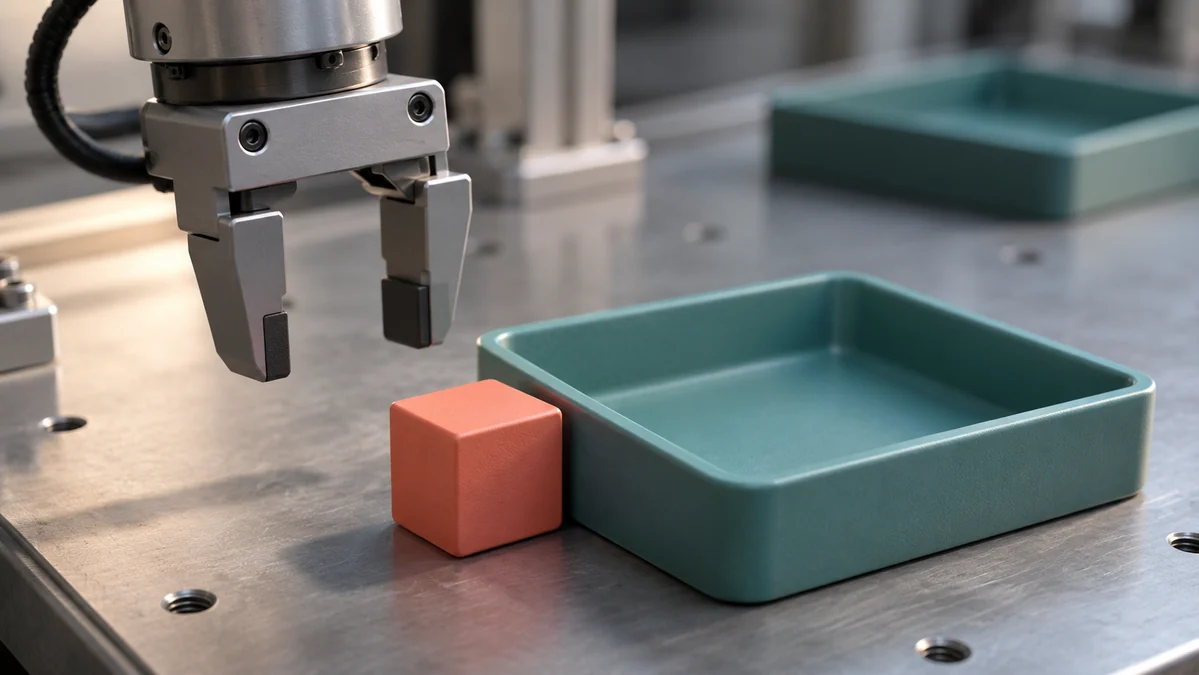
What the single checkpoint ran on
The model card describes a model that can request motion from a vision-language-action policy and use new camera observations and robot state to decide what to do next. SenseTime demonstrated the same checkpoint in simulation and on two physical arms. The model card lists ten hardware trials per task. Piper completed six pick-and-place trials and Piper X completed nine stacking trials. The tasks and execution methods differed. These are SenseTime's results under the stated configurations. They give no production acceptance rate and provide a poor basis for comparing the arms directly.
The release also shows a placement that misses and is corrected on a second try. The camera can observe the error, and the block remains within an area where it can be picked up. A softer, fragile or rolling part may make recovery less suitable. The same is true if the next station has already begun work based on the first placement. Whether the station can hold safely and see the new position determines whether this kind of recovery is a candidate for a production trial.
Deciding when to retry and when to pause
Suppose an electronics factory wants to place small plastic parts in a tote for inspection at the next station. A part sometimes lands at the rim. In other cases it goes in correctly and glare makes the camera report an empty tote. The first case can justify testing a controlled recovery within validated workstation conditions. Check whether the new observation truly locates the part and whether the part is still sound. Another grasp in the second case could damage a good part. An independent presence sensor or an operator can resolve that case first. If the view is blocked, the part is outside the controlled area or the next station has already taken over, pause and send the task to a person. Keep the model's decisions within the station's safety and release rules.
Some failures are cheaper to prevent. If misses tend to occur when the tote shifts, a better fixture or a station check for tote position can protect cycle time. An extra observation and correction may be worth testing where position variation is normal and the existing camera has a reliable view. Compare the current process with a version that includes one recovery opportunity. Count additional good parts, waiting time and manual rework.
From a successful trial to a full shift
Record the process as well as the outcome. For each part, keep the first placement result, whether recovery was attempted, time spent recovering and whether an operator stepped in. A recovered part can count toward completion. Report its effect on cycle time separately. Two processes may deliver the same number of good parts in a sample. If one often needs a second inspection while blocking a conveyor position, the next station can still see lower throughput. Include misplaced parts, false detections, missing parts and manual handling after a pause, with the same materials and settings for both approaches.
A higher recovery count still needs to be checked against damage, duplicate placements and missed inspections. A scratch may only show up downstream, so reconcile the station’s completion count with inspection results. Break the trial down by part type and cause of deviation so frequent, easy recoveries do not obscure rarer mistakes with higher costs.
Keep timestamps that a reviewer can replay: the end of the original move, detection of the deviation, the next observation and handoff to the operator. If most waiting occurs in vision processing, changing the motion policy may do little for cycle time. If a material repeatedly fools the camera, try a more reliable signal that it is in place and retest total time. The record helps the team decide whether to change the workstation, improve observation or keep the manual step.
Start on a bench isolated from production with representative material and lighting. Have the equipment safety and quality owners identify cases eligible for recovery, how long the station can wait and when a person takes over. Expand the sample or test across shifts if recovery handles common deviations within the time the station can spare. Keep the existing process if exceptions are rare and an operator can resolve them quickly. A purchasing decision needs repeatable evidence of how the recovery plays out and what it costs under production conditions. One successful grasp answers only part of that question.
Sources
- SenseTime, SenseNova-RoboRSI-27B full release announcement
Source published: · Accessed:
- SenseNova team, SenseNova-RoboRSI-27B model card and hardware trials
Accessed:
- SenseNova team, RoboRSI model and harness report
Source published: · Accessed:
Mokyun Editorial · neo@mokyun.com
